
2026 marks the arrival of the Year of the Horse, one of the most dynamic and captivating symbols in the Chinese zodiac. Traditionally associated with energy, freedom, perseverance, and success, the horse embodies the spirit of those who look ahead, explore new horizons, and embrace change without fear.
However, every zodiac cycle brings new cultural sensibilities. While in the past the horse was portrayed as an emblem of strength and forward momentum, today many brands are embracing a more intimate interpretation: the horse as a companion, a metaphor for balance, an invitation to slow down and reconnect with oneself.
Consequently, this shift reflects a broader evolution within contemporary Chinese society, where growing attention is placed on emotional well‑being, cultural authenticity, local roots, and everyday rituals.
And if you’re considering developing a campaign for Chinese New Year or other key moments in the lunar calendar, Value China can guide you from concept to design to implementation, building campaigns that are truly aligned with local culture.
Value China, a company specialized in digital solutions and consulting for the Chinese market, is the first official partner of ByteDance, Tencent, and Xiaohongshu in Italy.
Looking to expand your business in China? Learn more about our services.
The Lunar Calendar as Cultural Heritage and Strategic Leverage
Chinese New Year (春节 Chunjie) is one of the most crucial moments in the Chinese calendar: a collective ritual that brings together renewal, cultural memory, and deeply rooted symbols. For this reason, for brands, this translates into a very clear message: creating a “themed” campaign is not enough — it’s essential to understand the cultural codes that make this celebration so meaningful.
In recent years, Chinese New Year has become a true creative laboratory where:
-
heritage and modernity converge,
-
traditional symbols meet new social sensibilities,
-
immersive experiences coexist with iconic products.
Therefore, studying Chinese New Year is not an aesthetic exercise, but a fundamental step in the cultural localization process. A brand that interprets the meaning of the zodiac year correctly is perceived as close, respectful, and relevant.
Cultural and Social Trends of the Year of the Horse 2026
Campaigns dedicated to the Year of the Horse 2026 clearly reveal a shift in how brands interpret this celebration. Indeed, the horse is no longer just a zodiac symbol; instead, it becomes an emotional archetype, representing freedom, introspection, resilience, and a renewed way of looking toward the future.
Moreover, there is growing attention to regional culture and intangible heritage. Places like Gansu, together with traditional crafts such as Suzhou embroidery or Tang Sancai ceramics, enter brand campaigns as authentic narrative elements.
Meanwhile, Chinese New Year is also evolving into an offline experience: exhibitions, pop-ups, workshops, and sensory installations increasingly allow brands to create shared moments and everyday rituals.
Finally, another central theme is emotional well-being. Many brands are tapping into young people’s desire to slow down, ease pressure, and reconnect with authenticity.
Four Brands, Four Ways to Interpret the Horse
Heinz – “Paint the Horse’s Head”: Chinese New Year as a Pop Ritual
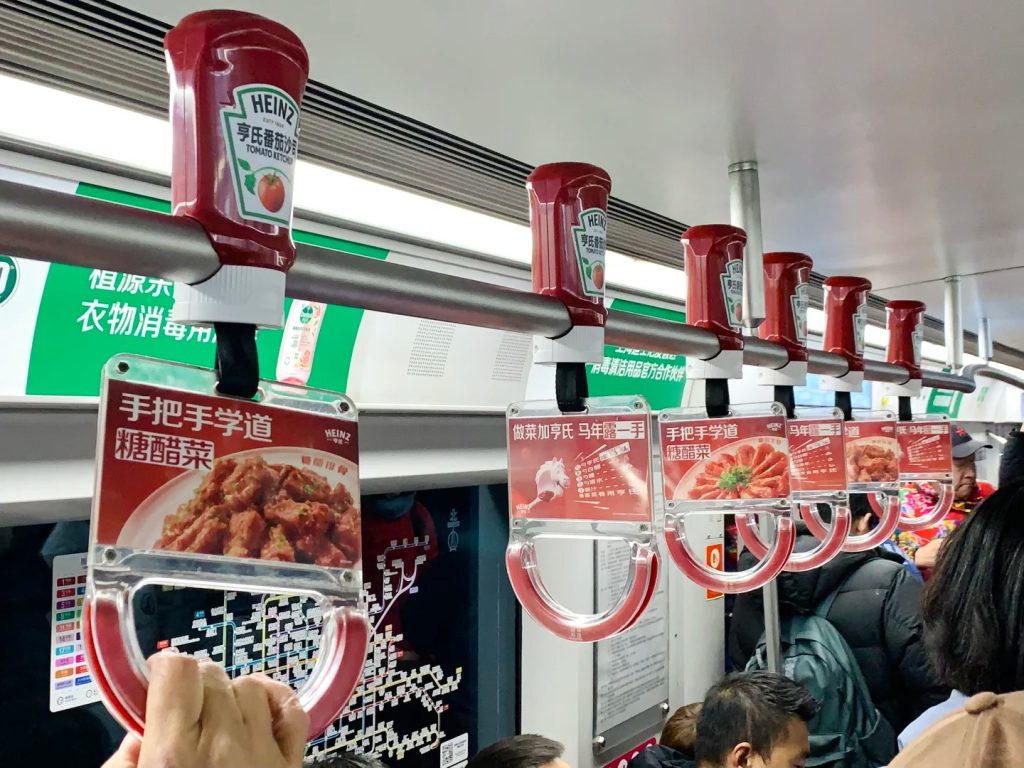
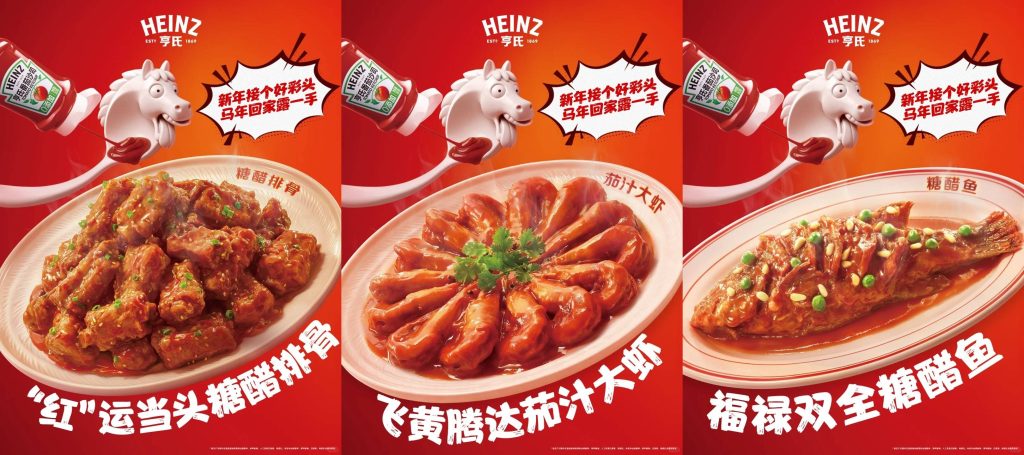
For the Year of the Horse, Heinz builds a campaign that enters Chinese New Year through everyday life, transforming an idiomatic expression into a culinary gesture of good fortune.
At the heart of the idea is a linguistic play: the assonance between tomato and the Chinese expression “涂马头” tú mǎ tóu (“to paint the horse’s head”) allows the brand to associate ketchup with a luck‑bringing ritual, making the product part of the celebration in a natural and humorous way. The spot invites viewers to “新年露一手,涂个马年好彩头” (xīnnián lù yī shǒu, tú gè mǎnián hǎo cǎitóu), meaning “show your skills for the New Year and bring good fortune by painting the horse’s head.”
Offline, Beijing’s Metro Line 10 becomes the stage for the campaign: bottle‑shaped handrails and the “54321” recipe printed on the pillars encourage people to take photos, share, and—above all—recreate the gesture at home. This simple, easy‑to‑remember recipe responds to young people’s desire to cook traditional dishes without stress, turning food preparation into a light and playful moment, aligned with the wish for “轻松过年” (qīngsōng guònián), a more relaxed New Year.
Why it works
-
Language becomes ritual: ketchup becomes the “final touch” that brings good luck.
-
A surprising offline activation: the metro turns into a shareable experience.
-
A young, accessible ritual: cooking becomes a game, not an obligation.
Heinz shows how Chinese New Year can be reinterpreted through simple, pop gestures, turning the horse into an everyday, ironic symbol that resonates with younger generations.
Documents: Chinese New Year as a Sensory and Immersive Experience
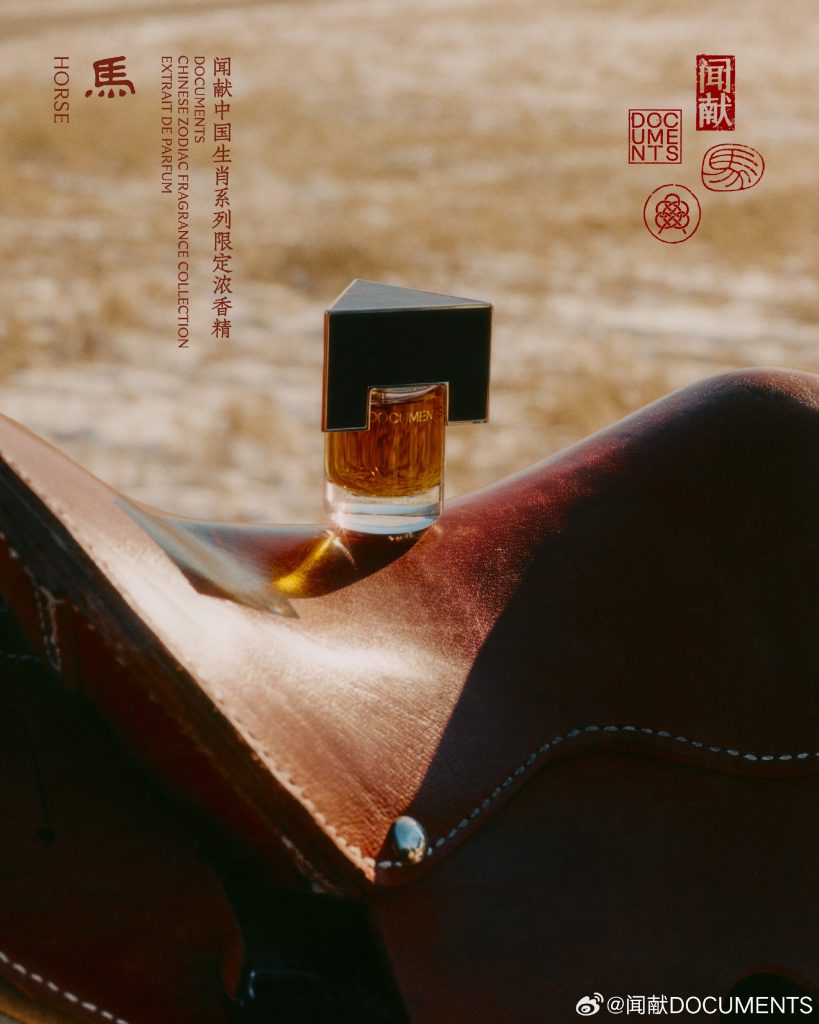
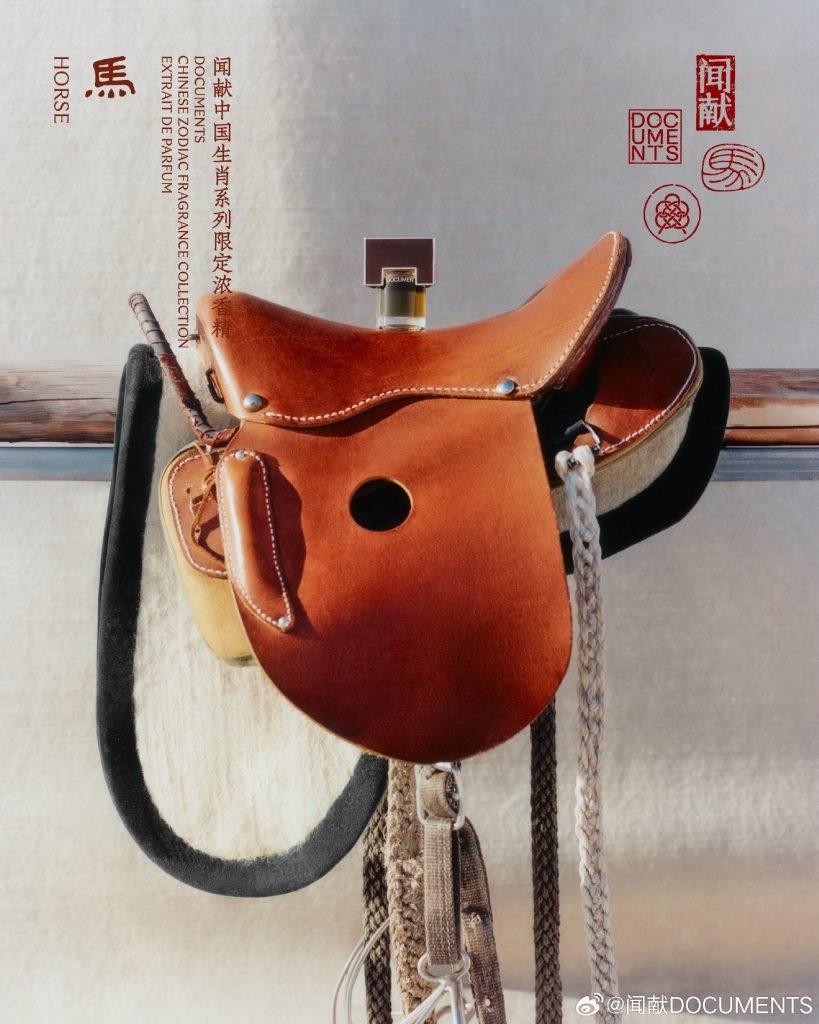
Documents chooses a deeply sensory and cultural path. The new HORSE fragrance, created together with perfumer Jasmine Liu, draws inspiration from the imagery of the grasslands: the sound of hooves, the warmth of bonfires, family gatherings under the open sky. Its olfactory notes — from hay to sea buckthorn, from apricot to jasmine, all the way to vetiver and sandalwood — reconstruct an emotional landscape that speaks of vitality, companionship, and the feeling of returning home.
The bottle design reinforces this ritual dimension: transparent crystal, a red leather‑covered cap reminiscent of a mane, golden details. Every element evokes the horse not as a zodiac symbol, but as an archetype of movement, warmth, and protection.
The campaign also comes to life offline with the “Red House” installation at Shanghai’s West Bund Dream Center: a space inspired by yurts and Mongolian carousels, where fragrance, visuals, and sound intertwine in an immersive experience. It’s a place that evokes both journey and return, distance and familiarity, transforming Chinese New Year into a moment of emotional belonging.
Why it works
- Culture becomes atmosphere, not decoration: HORSE builds a coherent sensory world.
-
Ritual design turns the fragrance into a symbolic object.
-
An immersive experience that connects place, memory, and intimacy.
Documents demonstrates how Chinese New Year can be narrated through the senses, turning the horse into a bridge between nature, emotion, and cultural identity.
Luckin Coffee: IP culture and pop rituality
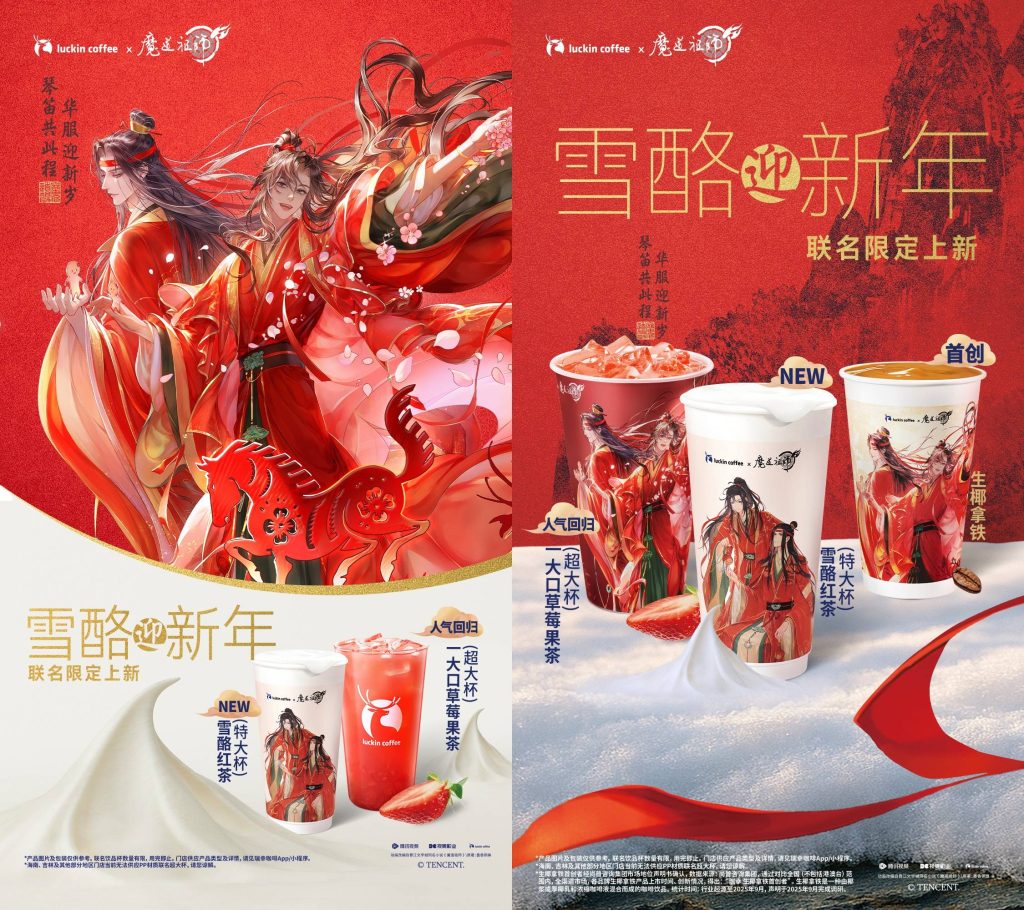
Luckin Coffee takes a completely different approach: a collaboration with the animated series The Grandmaster of Demonic Cultivation, transforming Chinese New Year into a full narrative universe.
Why it works
IP as community: fans of the animation become spontaneous ambassadors for the campaign.
The power of storytelling: beverages are described with rich, almost literary sensory language.
Physical engagement: “Stamp Shops” in 27 cities, blind merch, and collectibles.
Chinese New Year becomes a cultural game, a pop ritual that blends fandom, aesthetics, and everyday consumption.
The North Face: exploration, territory, and the horse as destiny
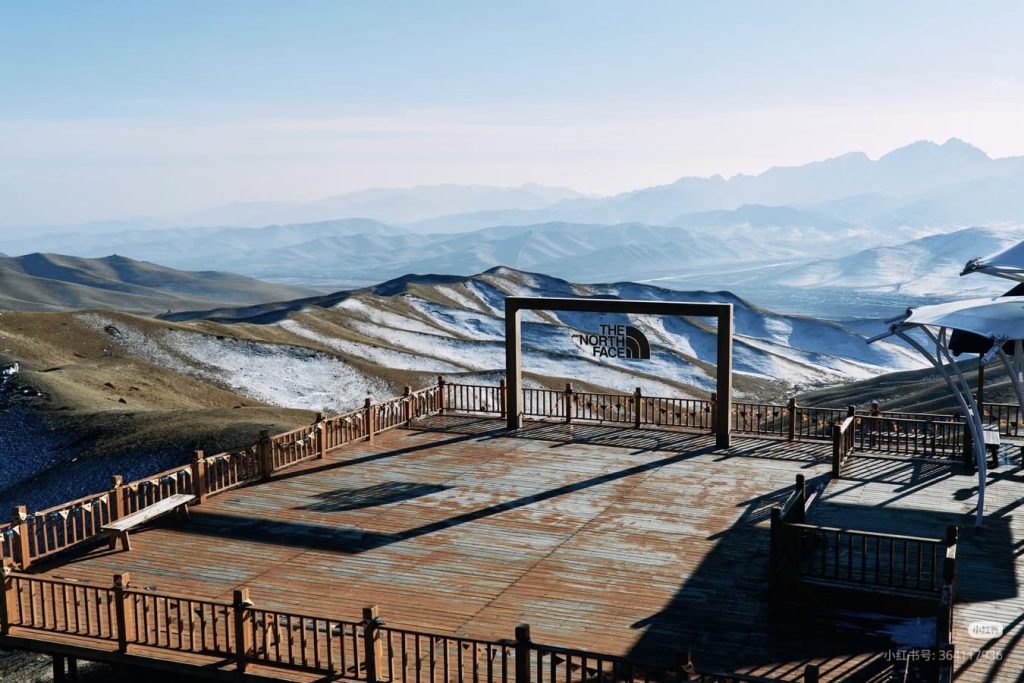
The North Face chooses a narrative that goes beyond zodiac aesthetics and brings the Year of the Horse back to the places where Chinese equestrian culture was born: Gansu and the Silk Road. The campaign unfolds as a three‑stop journey — Lanzhou, Wuwei Tianzhu, and Zhangye Shandan — turning the landscape into an integral part of the story.
In Lanzhou, the brand collaborates with the Gansu Provincial Museum to explore the history of horses along the Silk Road. In Wuwei Tianzhu, the experience becomes physical: trekking through wind and snow along the ruins of the Han–Ming Great Wall. In Zhangye Shandan, the run of wild horses becomes a metaphor for a more intimate quest — the search for one’s authentic spirit.
The exhibition “Exploration Is Destiny” completes the project, translating the theme of the Fire Horse into a visual language made of dynamic silhouettes and cartographic motifs, integrated into the new product line.
Why it works
-
The landscape becomes narrative, not just a backdrop.
-
The experience is real — museums, trekking, and open‑air scenery.
-
Perfect brand coherence: the horse becomes a symbol of continuous exploration.
The North Face shows that Chinese New Year can be lived as geography, movement, and physical experience, not just as a graphic theme.
From symbol to culture, from culture to experience
The Year of the Horse 2026 reveals a rich and multifaceted landscape. The brands that truly stand out are those that go beyond using symbols and instead build deep cultural narratives capable of speaking to people’s emotions and identities.
Consequently, Chinese New Year is a moment when culture is renewed, expressed, and shared. For Western brands, it represents a unique opportunity to:
-
understand the sensitivities of Chinese consumers,
-
build a shared cultural imagination,
-
demonstrate respect and cultural closeness,
-
create experiences that go beyond the product itself.
In conclusion, in a complex and constantly evolving market, culture is the key to relevance. And Chinese New Year remains the most powerful stage on which to show it.