
Content marketing has become a cornerstone of B2B strategies in China, enabling companies to attract and engage potential clients through valuable content that addresses their needs and supports their purchasing decisions.
In recent years, Chinese B2B marketing has undergone a profound transformation: from a promotional and support function, it has evolved into a strategic growth driver powered by data, artificial intelligence, and personalization. This shift is driven by three structural trends: the growing digital autonomy of buyers, increasingly complex decision-making processes, and the impact of AI on workflow efficiency.
In an increasingly digital and competitive landscape, content marketing is no longer just about informing, it’s about building trust, authority, and long-term relationships.
By 2026, B2B companies operating in China will need to integrate technological innovation, authentic storytelling, and omnichannel strategies to remain relevant and competitive.
The central role of short videos in B2B marketing in China
Short videos remain one of the most effective formats for B2B content marketing. According to the latest available data, Chinese B2B companies are allocating an increasing share of their budgets to short video content. Specifically, iResearch reports that 78% of Chinese B2B firms have increased their use of video content, while WeChat Channels saw a 45% rise in B2B video posts in 2024, particularly within industrial and tech sectors.
Thanks to their dynamic and immediate nature, short videos can quickly capture audience attention and convey complex messages in an accessible way. They also offer an excellent balance between production costs and communication impact.
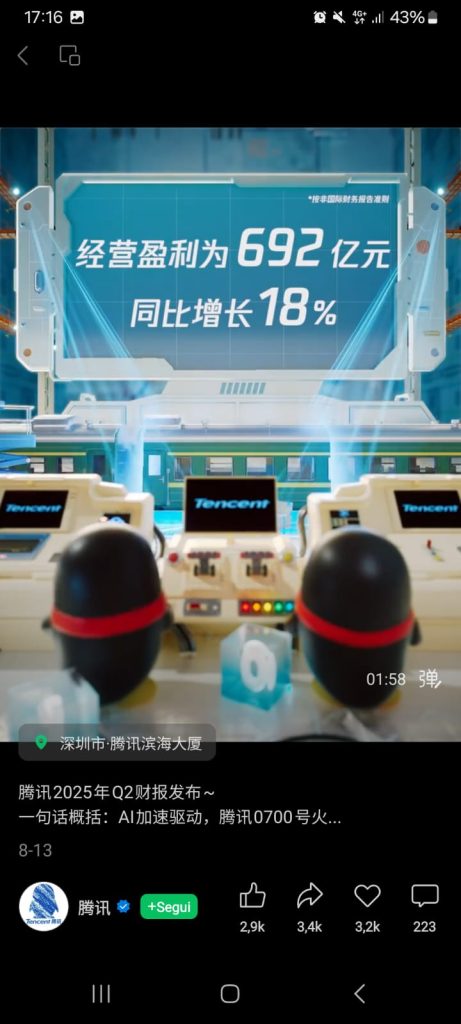
For example, Tencent leveraged WeChat and WeChat Channels to create personalized content and videos targeting business decision-makers, improving conversion rates and strengthening its position as a strategic partner for enterprises.




Moreover, in terms of long-term investment in video content production, short videos offer lower production costs, a relatively shorter production cycle, and more flexible and efficient positioning.
However, to be truly effective, they require careful planning to ensure consistent and coherent communication, this includes mapping out clear content positioning, developing guidelines, and building an editorial calendar. Companies must also be proactive in refining their content to draw attention to their business and products, avoiding being lost among the vast amount of content on digital platforms. Crucially, performance analysis and social media listening are essential tools for optimizing content strategy.
The social media for B2B content marketing
In just a few years, short video has become the most popular content format, driven by the rise of social media platforms like Douyin and Kuaishou. Beyond short videos, the exponential growth of internet users, over one billion in China, and the increasing number of hours spent on social platforms have made these channels central to companies’ digitalization and marketing strategies, including in the B2B space. More than 75% of B2B buyers prefer a self-directed, digital purchasing experience, making social media a crucial touchpoint throughout the buyer journey.
As a result, social media–based content marketing will continue to be a key direction for businesses. Chinese social platforms offer powerful tools to initiate interactive communication between companies and their customers.
Artificial intelligence (AI) is revolutionizing the content creation paradigm in B2B marketing in China
Artificial intelligence (AI) is no longer just an innovation, it has become a competitive necessity. Today, 66% of Chinese B2B companies use AI to boost marketing efficiency, automate content creation, and optimize performance. AI can analyze real-time data, enhance message personalization, and accelerate decision-making processes.
However, AI can only provide a “methodology,” not a fully tailored and actionable strategy. Strategy is inherently tied to the business itself, its specific needs, and the ability to implement it effectively. Behind any creative marketing or advertising strategy lies a blend of the creative team’s experience, professional background, and implicit cultural factors, all essential for planning and achieving meaningful results.
At the same time, new challenges are emerging: with the rise of AI-generated content, companies must learn to optimize their visibility in AI-driven search results by adopting strategies like Generative Engine Optimization (GEO). Baidu, for example, has integrated AI solutions to monitor user behavior and automatically adapt content, improving both relevance and campaign effectiveness.

Personalization and authenticity
B2B communication is becoming increasingly customized. B2B buyers now have higher expectations for corporate messaging, seeking greater authenticity and a more human touch. The individual is taking center stage even in B2B marketing, as Chinese business buyers are increasingly engaged through traditionally B2C channels such as social media, live streaming, and other virtual events.
Content marketing, as a means of delivering value, has shifted from product-centric to people-centric approaches. This evolution requires companies to focus on the quality of their content rather than quantity, with the goal of turning followers into customers.
Leggi anche: Quali sono le migliori piattaforme digitali per il B2B in Cina?
One-way communication does not align with the interactive nature of social media, where companies can build strong relationships with users from the earliest stages of the purchasing journey. Building trust and loyalty becomes essential by focusing on customer dialogue and the overall experience. Companies that invest in creating valuable and authentic content are able to foster deeper and more lasting connections.
Moreover, social platforms provide valuable insights into the target audience. Through social listening, businesses can gain a deeper understanding of users, their needs and pain points in order to optimize their content strategy.
In summary, B2B content marketing in China in 2026 is no longer just about creating quality content—it’s about building a smart, integrated, and human-centered ecosystem where AI, data, and authentic storytelling work together to generate trust, efficiency, and sustainable growth.