
The 618 Shopping Festival is one of the most important e‑commerce events in China. Originally created to celebrate JD.com’s anniversary on June 18, it has evolved into a nationwide shopping festival that now lasts over a month. It represents not only a major commercial moment for brands, but also a valuable opportunity to observe and understand the trends shaping the future of China’s consumer market.
On June 18, 1998, JD.com was founded, today the second-largest e‑commerce platform in China. Since 2010, the company has launched initiatives and promotions to celebrate its anniversary. Together with Alibaba’s Double 11, the 618 Festival has become one of China’s major shopping events.
Over the years, the festival has seen explosive growth, involving all major Chinese digital platforms. From Tmall and Taobao to newer players like REDnote (Xiaohongshu) and Douyin, 618 now spans an extensive range of categories, from electronics to everyday consumer goods.
Today, 618 is far more than a shopping event: it is a barometer of China’s evolving consumer landscape and of emerging purchasing behaviors. For brands, it is an opportunity to understand market trends and refine their sales strategies.
In 2026, however, something changed dramatically: 618 is no longer a race to the lowest price, but a laboratory of AI‑driven retail innovation. This year, Chinese platforms devoted more effort to AI strategies than to traditional deep‑discount promotions. The result is a festival that anticipates the future of global commerce, where AI permeates every layer of the supply chain — from product discovery to delivery, from livestreaming to logistics.
The retail market is accelerating fast: key data from 2026
China’s retail market reached USD 2.27 trillion in 2026, with projections pointing to USD 3.34 trillion by 2031 (CAGR 8.06%). E‑commerce accounts for over one‑third of the total market, driven by electronics, smart‑home products, and government‑backed trade‑in incentives.
The platforms recorded exceptional performances:
Tmall/Taobao: over 40,000 brands doubled their sales; +40% YoY for brands exceeding 100 million yuan.
JD.com: more than 800,000 hours of livestreaming hosted by AI avatars; +200% smart‑home transactions in just 52 hours.
Douyin: over 10 billion yuan in coupons issued and zero commissions on product cards.
Tmall: 600+ new international brands from 29 countries — the highest participation ever.
AI Innovations Driving China’s 618 Festival 2026
Tmall/Taobao: Qianwen as a universal shopping assistant
Alibaba has integrated its large language model Qianwen directly into Taobao. Users can chat with the AI to select, compare, and purchase products. The system supports:
Virtual try‑on for fashion and beauty
Automatic calculation of discounted prices
Assistance with flash purchases
Understanding of vague requests (e.g., “something elegant for a summer dinner”)
The AI captures the consumer’s intent and provides targeted recommendations — even when the user doesn’t know exactly what they’re looking for.
JD.com redefines 618: a fully AI‑driven retail ecosystem
JD.com has announced its first “fully AI‑integrated” 618 Festival. The innovations include:
JoyInside — an AI agent for smart hardware that collaborates with nearly 200 brands (home appliances, robotics, healthcare, toys). Integration into 10+ million devices is expected by the end of the year.
JoyStreamer — AI avatar livestreamers that manage the entire workflow: planning, hosting, moderation, sales, and post‑stream analytics. They have reduced staffing costs by 90% compared to human hosts.
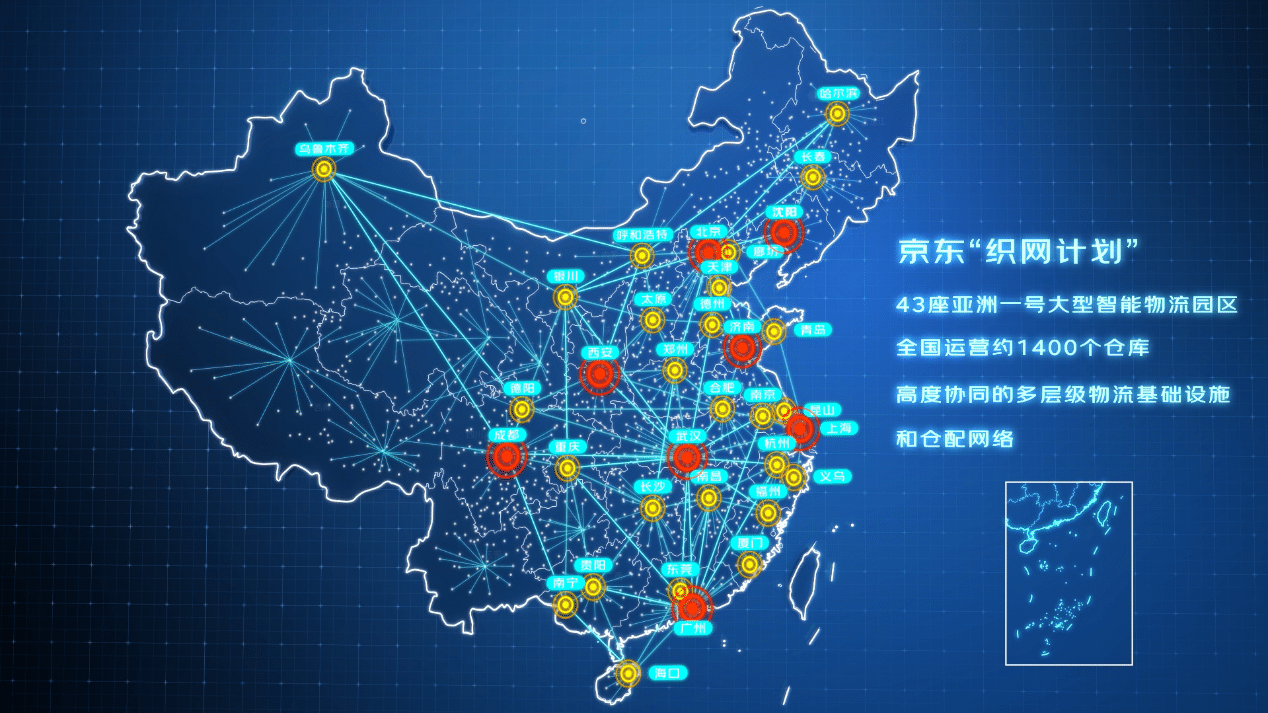
AI in logistics — JD’s proprietary large language model optimizes delivery routes, warehouse layouts, and inventory scheduling using data from thousands of supply‑chain modules.
AI in healthcare — JD Health has launched an ecosystem of AI medical assistants (doctor, nutritionist, pharmacist) connecting users to online consultations, rapid tests, home care, and prescription‑delivery services.
Douyin and live commerce
During the 6.18 festival, Douyin confirms its role as one of the most powerful engines of digital consumption in China. With over 1 billion monthly active users and an ecosystem that blends entertainment, product discovery, and native checkout, the platform now generates 63% of its GMV through live commerce. For Western brands, this means one thing: conversion happens live, not on the product page. Since April 1, 2026, Douyin has also enforced mandatory AI‑content labeling, requiring any AI‑generated video to display a notice within the first five seconds. This shift increases transparency and pushes brands to rethink creativity, authenticity, and compliance. In a market where trust is a competitive asset, Douyin is the place where relevance is built or lost in real time.
WeChat Mini Store
WeChat Mini Store is a Mini Program, a sub‑application integrated within WeChat (1.2 billion users), the Chinese super‑app that combines messaging, social features, payments, and shopping in a single platform.
For Western brands, it is the leading Direct‑to‑Consumer (DTC) channel in China: no security deposit, minimal entry costs, and full control over data, UX, and CRM. Unlike Tmall (a marketplace) or Douyin (algorithm‑driven), the Mini Store leverages WeChat’s social graph: shares in chats, groups, Moments, and livestreaming generate organic traffic and loyalty.
REDnote: the engine of the trust economy during 6.18
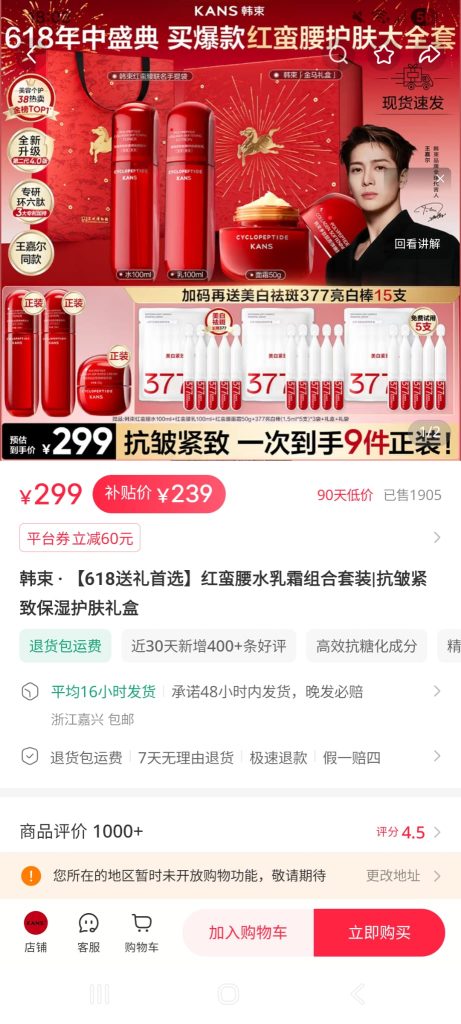
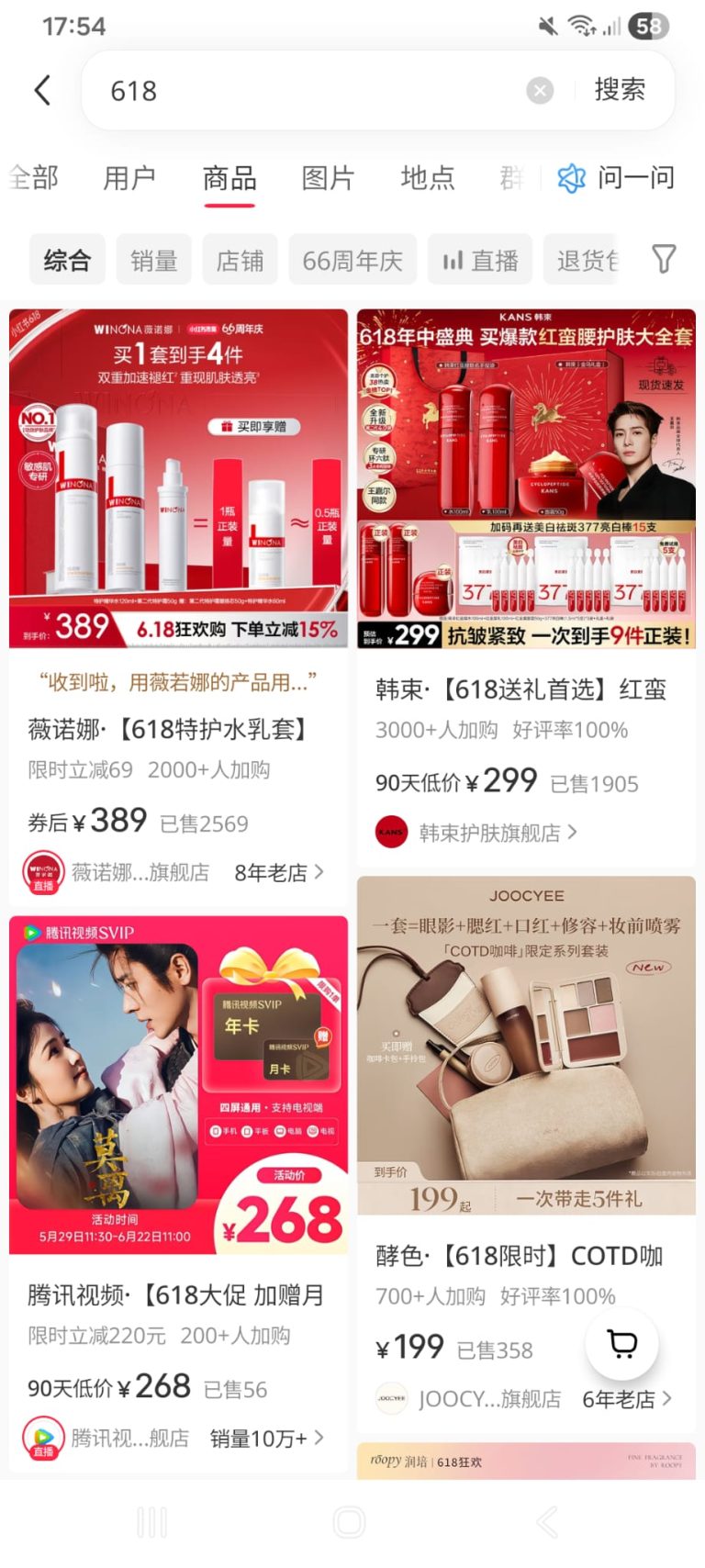
Product section on REDnote (商品)
In an increasingly crowded digital ecosystem, REDnote (Xiaohongshu) has emerged as the platform that most strongly shapes product discovery and evaluation during the 6.18 festival. Its strength lies in peer trust: users arrive with specific questions and expect detailed, experience‑based content. This makes REDnote fundamentally different from platforms like Douyin or Tmall, where visibility is driven primarily by algorithms or promotional mechanics.
On REDnote, credibility is built through the authentic voices of users, micro‑influencers, and professionals. As a result, REDnote functions first and foremost as a research tool, a validation engine, and a platform that directly guides consumer decision‑making.
Why REDnote is so influential during 6.18
-
It represents the first touchpoint of the funnel: product discovery increasingly happens on REDnote through unboxing videos, reviews, comparisons, and visual storytelling.
Its audience is young and has strong purchasing power: over 70% of users belong to the post‑90 generation and live in first‑ and second‑tier cities, as indicated in the document.
It integrates lifestyle content and e‑commerce: the “Friendly Marketplace” model allows brands to connect inspiration and conversion in a native, seamless way.
It amplifies the role of KOLs and KOCs: KOLs generate awareness, while KOCs build trust. It is the combination of the two that delivers the highest ROI.
The REDnote 2026 Game‑Changing Innovations
2026 marks a qualitative leap in the integration between platform content and commerce:
Enhanced livestreaming: live‑commerce orders grew 9.4× YoY, driven by features such as the “Live Breathing Light” and competitive merchant ranking systems.
AI‑assisted discovery: tools like Diandian and AIGC‑generated content — with a 3.2× higher CTR — make product discovery more intuitive and personalized.
Cross‑platform integration: initiatives such as Alibaba’s “Red Cat Plan” and partnerships with JD.com connect REDnote to major marketplaces, creating a seamless omnichannel funnel.
Takeaway for Western Brands
1. AI has already transformed the purchase funnel
The peak of search activity has shifted to mid‑May, roughly 4–6 weeks before the festival. Consumers now rely on AI assistants such as Tongyi Qianwen, Doubao, and JD AI Buy to compare cross‑platform prices and analyze reviews even before landing on Tmall. Opening day is no longer an impulse‑driven moment, but the final stage of a decision that has already been shaped.
2. TikTok Shop is Europe’s new gateway into the 618
With its expansion to 10 European countries, the cross‑border model available from June 1, 2026 (United Kingdom, Spain, Ireland, Germany, France, Italy, Austria, Belgium, the Netherlands, Poland) enables brands to rapidly test demand, content, and pricing without the investment required by traditional Chinese marketplaces. It acts as an operational bridge that lowers entry barriers and allows Western brands to validate their potential in China before scaling.
3. Chinese consumers seek a triad of values: gratification, emotion, wellbeing
From beauty to low‑alcohol beverages, emotional value outweighs price. While European brands naturally excel in quality, storytelling, and heritage, the challenge lies in communicating these strengths in a way that resonates with Chinese audiences, leveraging cultural relevance and an omnichannel experience.