
Italian furniture has long been a symbol of elegance and quality worldwide. In recent years, however, Made in Italy furnishings have been winning over an increasingly broad audience in China, appearing in highly popular television series and subtly shaping global aesthetics as well as Chinese consumer choices.
Why should Italian furniture brands pay close attention to this trend, and more importantly, how can they integrate it into their marketing strategy for the Chinese market?
Would you like to explore further with our team of experts? Fill out the form below to become part of our community.


From Love’s Ambition («许我耀眼»)
The charm of Italian furniture on TV
In recent years, Chinese television series have featured a growing number of Italian furniture brands as silent yet highly influential protagonists. A key example is the series Love’s Ambition («许我耀眼»), where Italian products appear not only as functional objects but as symbols of status, elegance, and refined taste. The homes and offices of the main characters, furnished with Italian design pieces, become mirrors of a lifestyle ideal to which viewers aspire.
This phenomenon fits into a broader context, highlighting how consumption is increasingly driven by content: purchasing furniture is no longer merely a practical need, but a choice inspired by emotions and the lifestyle portrayed in the media audiences consume. Italian furniture, embedded in engaging narratives, ceases to be simple décor and transforms into powerful symbols of a desired status, reinforcing the identification between viewer and protagonist.
Moreover, this trend underscores the importance of emotional brand storytelling. A well-communicated design, integrated into a coherent narrative, is perceived as more than just furniture, it becomes an expression of lifestyle and aesthetic identity.
For Italian brands, this represents a strategic opportunity to convey their value in an authentic and engaging way, moving beyond traditional advertising messages to enter the emotional narrative of the consumer.

From Love’s Ambition («许我耀眼»)
The power of social media in spreading the trend
Chinese users are extremely active in sharing aesthetic inspirations drawn from TV series: they recreate settings, reinterpret the interiors shown on screen, and transform them into viral content. This spontaneous sharing mechanism generates a multiplier effect that increases product visibility and places them at the center of digital conversations, helping to consolidate the imagery of the ‘Italian taste’.
In this context, REDnote (Xiaohongshu) plays a central role in the dissemination of user‑generated content (UGC), significantly amplifying the virality of trends related to furniture and design.
As a hybrid platform between social media and e‑commerce, Xiaohongshu is particularly popular among young Chinese consumers who are attentive to lifestyle and aesthetic taste. Users do not merely observe content passively; they actively participate by sharing reviews, interior design tips, photos of their homes inspired by scenes from TV series, or even full ‘copy looks’ of the settings shown on screen.
This dynamic turns every viewer into a potential brand promoter, transforming inspiration into action and multiplying the visibility of Italian furniture through authentic and personal recommendations. In a digital ecosystem like China’s, where trust is built through shared experiences, Xiaohongshu proves to be a powerful tool for extending the narrative begun on TV and consolidating the identity of Italian design within the everyday lives of consumers.
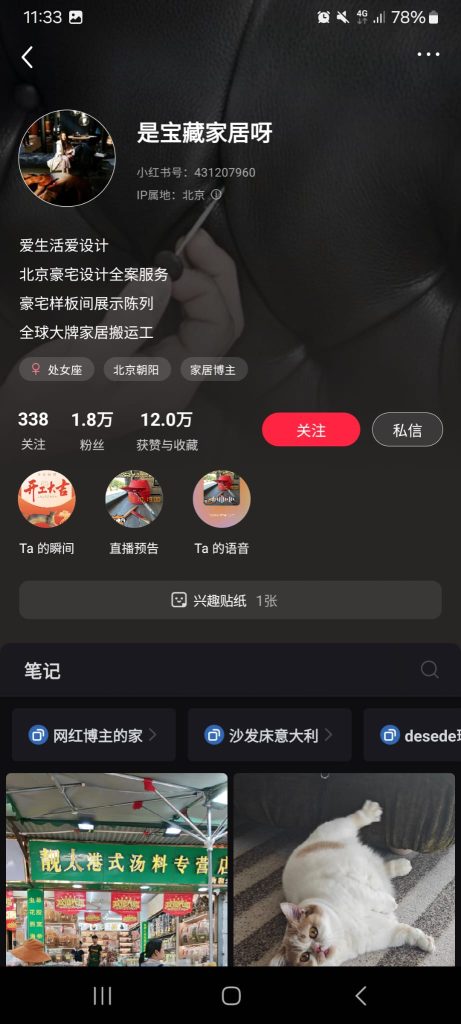
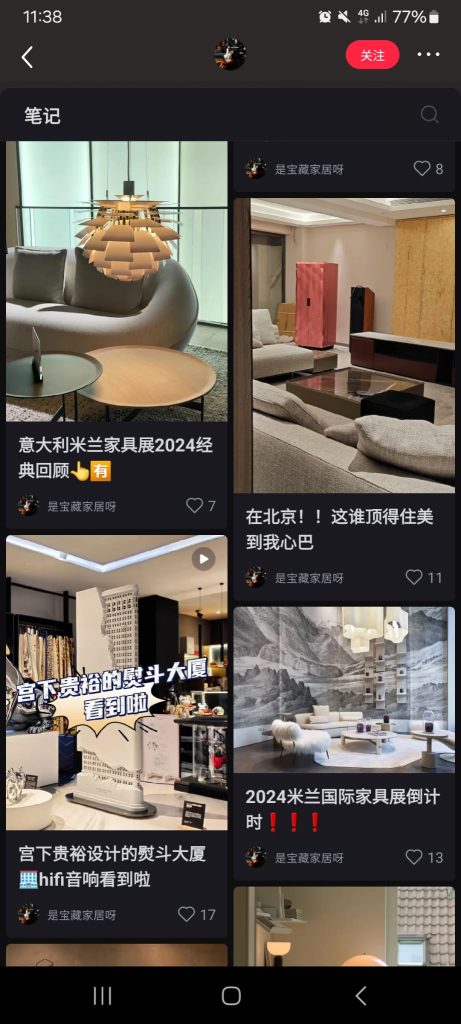
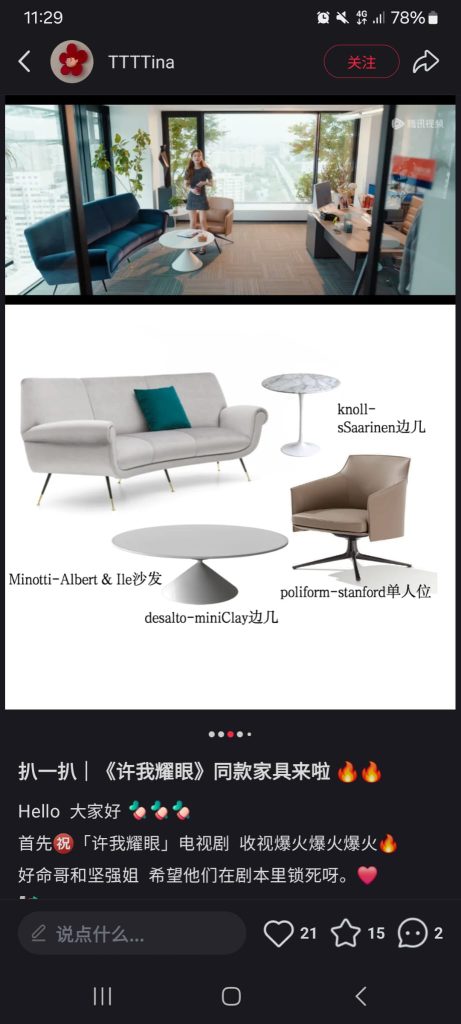
Design Blogger on Xiaohongshu
Discover how Value China can support you in promoting your design & furniture brand in China! Contact us at info@valuechina.net
If you would like to receive industry updates, subscribe to our newsletter by filling out the form below.
How can Italian Design & Furniture brands leverage this new communication driver?
For Italian brands, this evolution represents a genuine opportunity for innovation in marketing. Here are some ideas on how to leverage this phenomenon to increase visibility and boost sales in China.
4 takeaways for your marketing strategy
Collaborations with TV Series and Influencers The first step could be to collaborate directly with Chinese television productions. Working with crews and design sets allows Italian brands to position themselves within highly influential visual contexts, bringing their products into the homes of the series’ protagonists. Collaborations with interior designers and influencers in the furniture world can then amplify the message and generate shareable content.
Short Videos on Xiaohongshu and Douyin Social platforms such as Xiaohongshu and Douyin are the ideal ground for storytelling‑based marketing and short videos. Creating brief clips that narrate stories of design and lifestyle, with Italian furniture as the protagonist, conveys a more emotional message compared to traditional direct advertising. A good example could be a video showing how a space furnished with Italian design transforms a person’s daily life, enhancing their social status and happiness.
Integration into Everyday Life Contexts Instead of simply showcasing products, stories could be set in everyday contexts where Italian furniture becomes an integral part of the characters’ lives. Positioning furniture as indispensable elements within a life narrative, for instance, in a romantic scene or a moment of professional success, turns the product into a symbol of aspiration for the Chinese audience.
“Star Style” Collections Another interesting strategy could be to create collections inspired by the furniture seen in TV series. Showcasing, on social media or on the brands’ official websites, furniture “identical or similar to those seen on TV” creates an immediate connection with fans of the series, who wish to recreate in their own homes the chic and sophisticated atmosphere of television settings.
Emotional storytelling as a new marketing lever
The Chinese market is constantly evolving, and the trend of Italian furniture in TV series is not just a sales opportunity, but a genuine chance for furniture brands to enter the heart of Chinese visual culture.
A marketing approach based on storytelling, through drama series and short videos, not only stimulates purchases but also helps reinforce the image of Italian design as a symbol of lifestyle, elegance, and modernity.
For Italian brands, the opportunity is clear: embrace this new way of communicating, learn from the social dynamics of the Chinese market, and transform design into a true narrative experience that resonates with the emotions and aspirations of consumers.