
What does it really take to stay competitive today?
In recent years, the Chinese market has undergone rapid and profound transformations, both in consumer behavior and in industry dynamics. In this ever-evolving context, Value China Talks was born: a new format created by Value China to explore strategic sectors of the Chinese market alongside outstanding guests, experts, and professionals who offer fresh insights and timely updates.
The first edition focused on the design and furniture sector, with a direct look at its evolution in China, featuring Ming Li, Area Manager for Fuorisalone and a key figure in the design landscape. With a background spanning academia, institutions, and trade fairs, Ming perfectly embodies the role of cultural and professional bridge between Italy and China, offering a deep and multidisciplinary perspective on the industry.
““For the past ten years, I’ve worked in the world of design and fashion. Today, I see a Chinese market that is far more mature, curious, and attentive to product quality and storytelling.” – Ming Li
Do you work in the design and furniture industry and want to explore further? Get in touch with us today!
Want to enter the Chinese market? Then get ready for Neijuan!
According to Ming Li, Area Manager for Fuorisalone, anyone who still looks at the Chinese market through the lens of ten years ago is already out of the game.
Today, the context is defined by a single keyword: Neijuan (内卷), a spiral of internal competition where everyone fights against everyone in a climate of overproductivity, stress, and saturation.
This is post-Covid China, where even furniture giants like Red Star Macalline and Easy Home have collapsed under the weight of the crisis.
Faced with this scenario, Chinese brands respond with another key concept: Chu Hai (出海) – “going out to sea,” seeking opportunities beyond their borders. But beware: internationalizing without a commercial strategy is like sailing without a rudder. As Ming points out, many Chinese brands are indeed expanding abroad, but often without a clear direction, without distributors, without a business model.
And what about Italian brands?
If they want to truly compete in China today, they must stop seeing it as a mere “export market” and start understanding it for what it is, developing a targeted market and marketing strategy.
Let’s take a look at the key insights that emerged from the interview with Ming Li.
How “Made in Italy” Design is perceived in China
In recent years, the perception of Made in Italy in China has undergone a significant evolution.
While in the past the prestige of a brand alone was enough to attract consumers, today the Chinese public is much more selective: they seek niche, authentic products with a strong cultural identity and a good quality-price ratio. This shift doesn’t only concern Italy, it reflects a broader transformation in consumer sentiment across all international brands.
One of the main drivers of this evolution is the Guochao (国潮) phenomenon, which represents the rise of Chinese cultural pride and the growing value of local brands.
Consumers, especially younger generations, are increasingly drawn to products that combine elements of Chinese tradition and culture with contemporary design and distinctive storytelling.
In this context, Made in Italy hasn’t lost its value, but it must dialogue with a new sensibility, one that appreciates quality but also the ability to respect and understand Chinese culture.
Do you work in the design and furniture industry and want to explore further? Get in touch with us today!
How Italian Design & Furniture Brands can succeed in the Chinese Market
To stand out in such a highly competitive ecosystem, Italian design and furniture brands must adopt a multi-layered strategy that combines cultural adaptation, constant innovation, and collaboration with local partners and distributors.
While in fashion, brands like Gucci and Prada have already integrated Chinese symbols and festivals into their communication, this China friendly approach is still rare in the design world.
As Ming suggests, it’s essential to understand the specificities of the Chinese system, from digital platforms to language, and rely on local partners to build an effective presence.
Furthermore, events like the Salone del Mobile must return to being true spaces of innovation, because Chinese audiences are demanding, they crave tangible novelty, communicated in real time and with cultural sensitivity.
The role of REDnote and the Key Opinion Professionals


Key Opinion Professionals Accounts in Design industry on Xiaohongshu
In the Chinese digital landscape, platforms like REDnote (Xiaohongshu) have become central to the design and furniture sector, not only as a source of inspiration but also as a powerful marketing tool.
As Ming highlights, REDnote promotes a more refined aesthetic culture, helping consumers develop a more conscious eye for design. It also represents a paradigm shift compared to WeChat, offering direct visibility to brands and opening new ways of interaction.
Within this ecosystem, Key Opinion Professionals (KOPs) are emerging, experts and industry professionals who don’t just promote, but educate and influence through high-quality content.
The market is shifting from large malls to digital consumers, increasingly drawn to authentic and differentiated content. Just like in fashion, these “value carriers” will be crucial in building trust and driving sales in the design world as well.
The role of trade fair in reaching the Chinese market
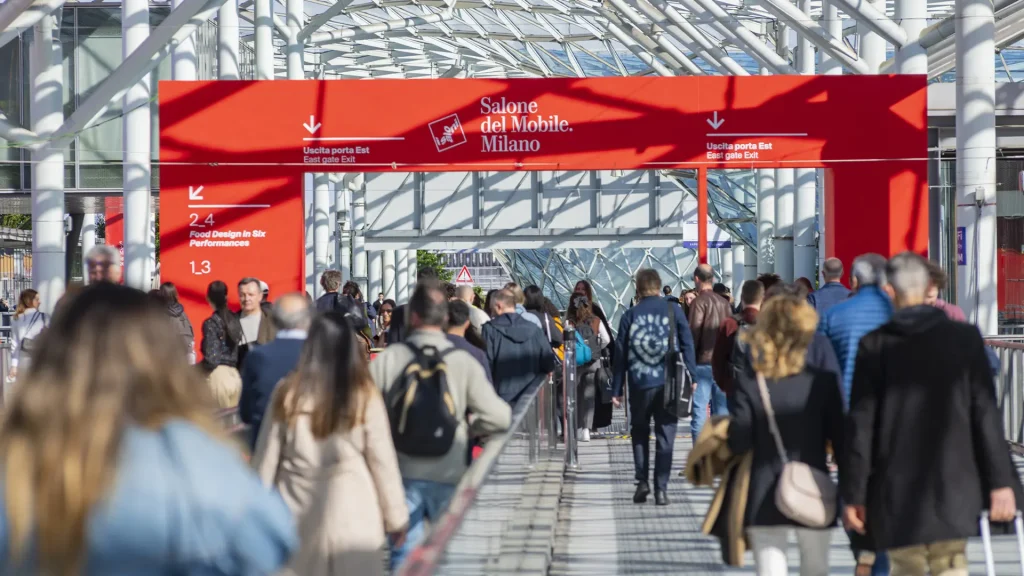
Despite the rise of digital, physical trade fairs still hold symbolic and strategic value for the Chinese public. As Ming underlines, the Salone del Mobile remains a dream for many Chinese professionals and enthusiasts, even though some Italian brands are now skipping it.
These events also represent essential touchpoints for conveying brand values, assuming they’re backed by a tailored, integrated, and compelling market strategy.
In this context, live streaming becomes a key tool: already embedded in Chinese consumers’ daily shopping habits, it allows brands to reach those who cannot travel due to time or budget constraints.
Investing in trade fairs with a cultural and value-driven approach, rather than a purely commercial one, can generate a lasting and meaningful impact.